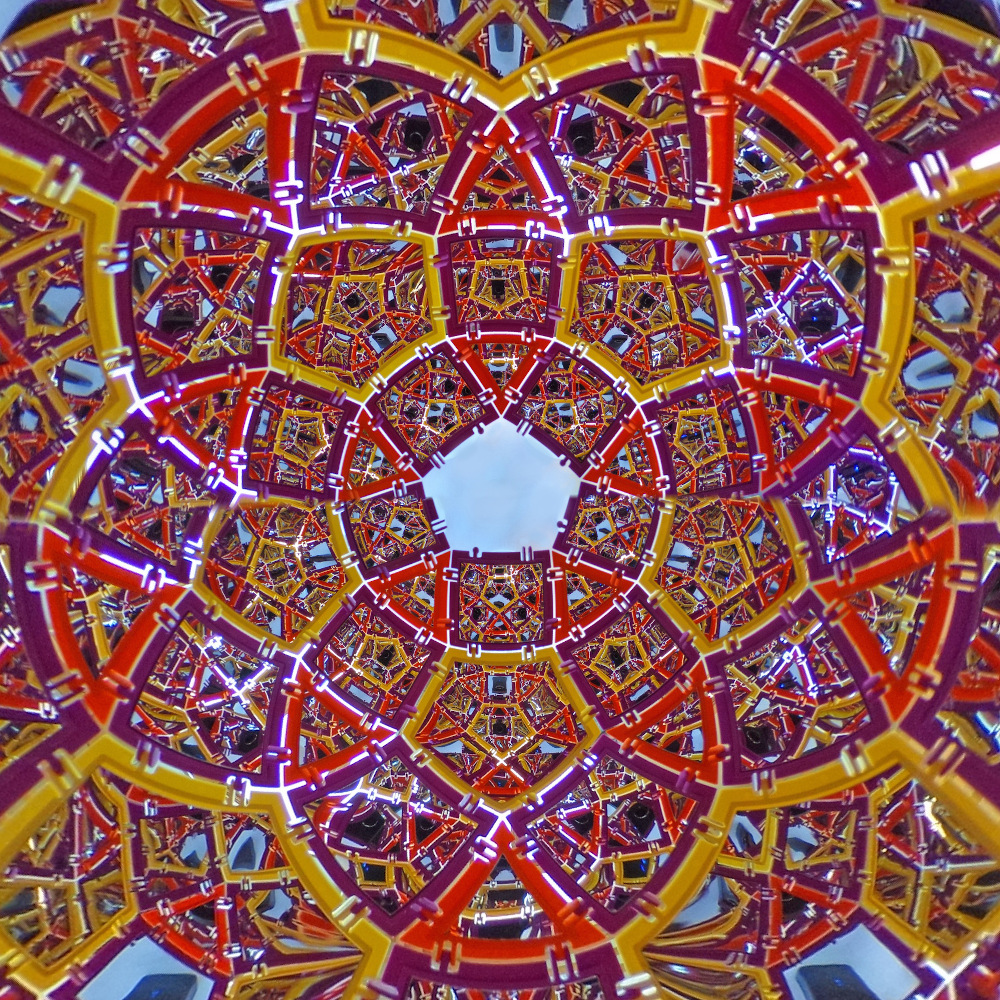
AT 20-001_FA22: How does a kaleidoscope work? How did M. C. Escher draw his famous tessellations? How can the multitude of beautiful patterns found in nature be explained? In this course we will answer these questions and use this knowledge to create our own kaleidoscopes, tessellations and fractals.
Through hands-on activities we will also explore symmetric solids, games and puzzles, and poetry and dance inspired by mathematics. Finally we will design mollusk shells on a computer for 3D printing and draw 3D sculptures in a virtual reality studio. These hands-on activities will be accompanied by lectures and videos that provide the necessary explanations and background information.
Through hands-on activities we will also explore symmetric solids, games and puzzles, and poetry and dance inspired by mathematics. Finally we will design mollusk shells on a computer for 3D printing and draw 3D sculptures in a virtual reality studio. These hands-on activities will be accompanied by lectures and videos that provide the necessary explanations and background information.
- Profesor: Bjoern Muetzel