AT 3-001_FA21: Course Alias: at3-1-fa@eckerd.edu
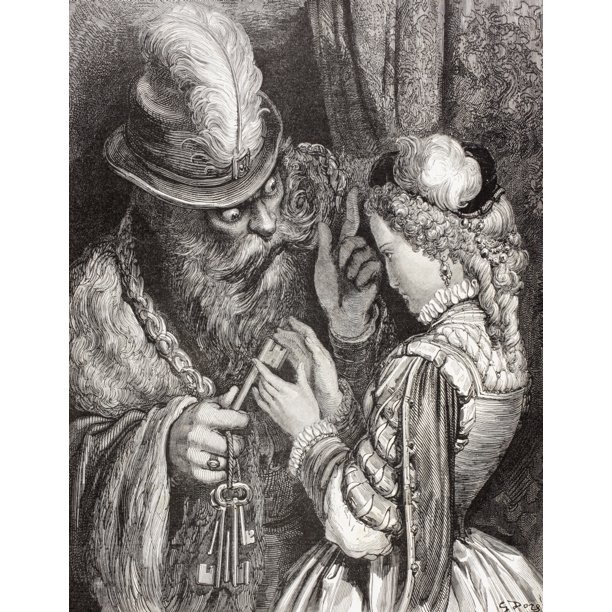
What does the term fairy tale mean to you? This course will give you a new perspective on the fairy tale genre from an early modern French perspective. The term ?fairy tale? (conte de fees) was coined in 1697 by the French writer Marie-Catherine d?Aulnoy. During this time period in France, fairy tales were penned by adults for adults. Best sellers in their day and beyond, these tales uphold the marvelous and bizarre. Rife with transformations and metamorphoses, these stories distinctly diverge from Disney fairy-tale representations you may know. Key writers of the period we will study are Marie-Catherine d?Aulnoy, Marie-Jeanne L?Heritier, Charles Perrault, Jean de Prechac, and Jeanne-Marie Leprince de Beaumont. Our readings will be complemented by viewing Jean Cocteau?s Beauty and the Beast (1947), Jacques Demy?s Donkey Skin (1970), and Catherine Breillat?s Bluebeard (2009) allowing students to engage in cinematographic analysis. We will explore questions such as: How do we define a fairy tale? How did these tellers engage with the creaturely? What role did transformations and metamorphoses play in these tales? Is there a difference between the male- and female-authored fairy tale of the era? We also will be reading secondary sources anchored in the rich field of fairy-tale studies, aiming to familiarize students with a variety of genres. This course will emphasize literary and filmic critical analysis through daily responses (written and oral), short papers, and a team oral presentation. Our class will culminate in a final creative project in which students will author their own fairy tale. All texts and films will be in English translation.
What does the term fairy tale mean to you? This course will give you a new perspective on the fairy tale genre from an early modern French perspective. The term ?fairy tale? (conte de fees) was coined in 1697 by the French writer Marie-Catherine d?Aulnoy. During this time period in France, fairy tales were penned by adults for adults. Best sellers in their day and beyond, these tales uphold the marvelous and bizarre. Rife with transformations and metamorphoses, these stories distinctly diverge from Disney fairy-tale representations you may know. Key writers of the period we will study are Marie-Catherine d?Aulnoy, Marie-Jeanne L?Heritier, Charles Perrault, Jean de Prechac, and Jeanne-Marie Leprince de Beaumont. Our readings will be complemented by viewing Jean Cocteau?s Beauty and the Beast (1947), Jacques Demy?s Donkey Skin (1970), and Catherine Breillat?s Bluebeard (2009) allowing students to engage in cinematographic analysis. We will explore questions such as: How do we define a fairy tale? How did these tellers engage with the creaturely? What role did transformations and metamorphoses play in these tales? Is there a difference between the male- and female-authored fairy tale of the era? We also will be reading secondary sources anchored in the rich field of fairy-tale studies, aiming to familiarize students with a variety of genres. This course will emphasize literary and filmic critical analysis through daily responses (written and oral), short papers, and a team oral presentation. Our class will culminate in a final creative project in which students will author their own fairy tale. All texts and films will be in English translation.
- Teacher: Kate Bastin